


SOCIALIZING YOUR PUPPY -Text Version
TRUE TO GOLD BLOG 4/4/26

Socializing Your Puppy — Being Prepared for anything!
Protecting your puppy from a dog fight. OR Preventing a Dog Fight!
1. A Brand-New World for Your Puppy
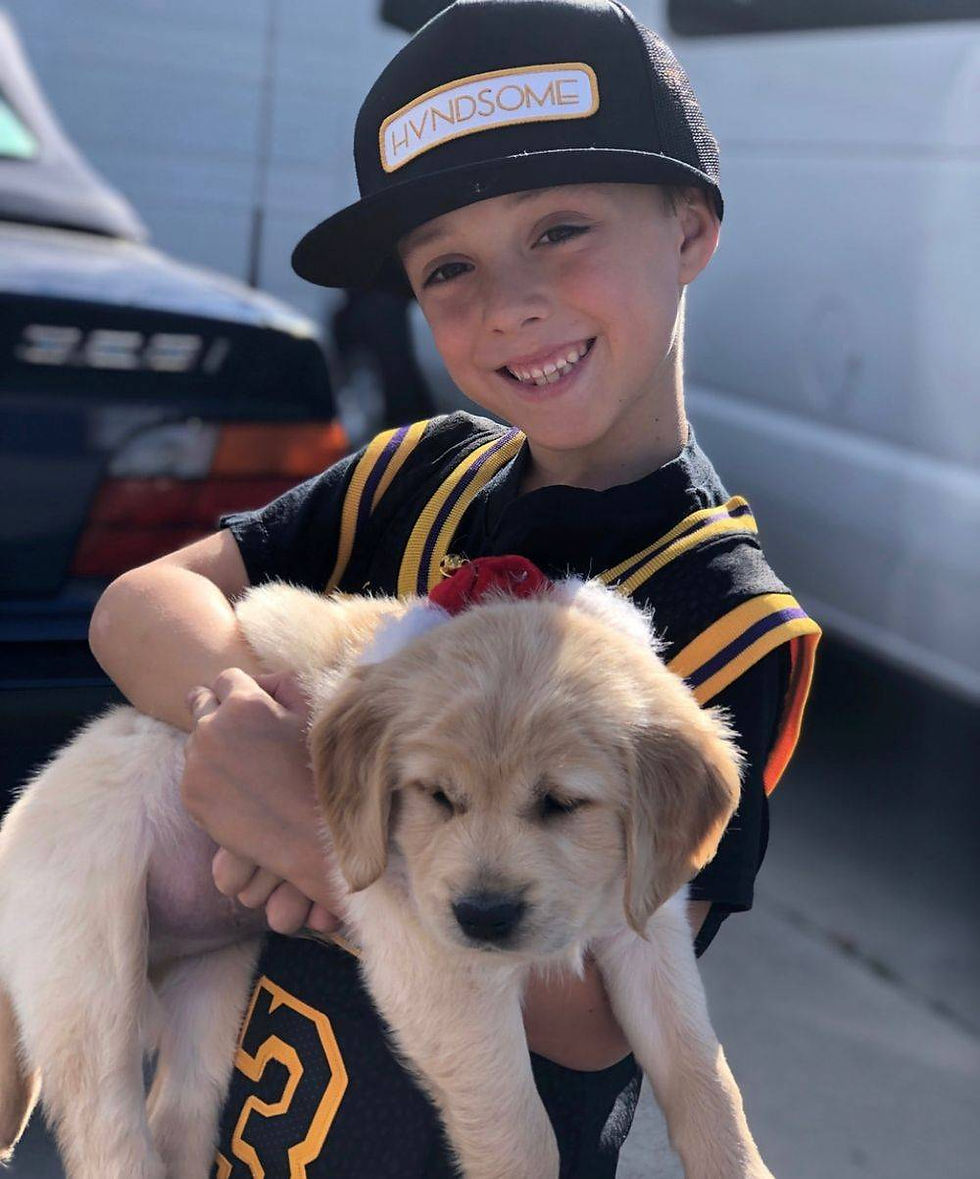
You just brought your puppy home. She’s probably eight weeks old. Everything is new. She has left the only world and family she has ever known. Meanwhile, we humans bring expectations — memories of past puppies, scenes from movies, training books, and that warm, fuzzy mental picture in our imagination of how this is “supposed” to go.
Your puppy may be all of that… some of that… or none of that. But all of this information is relevant to having a good experience with socializing your puppy.
2. Replace Expectations With Empathy
Let’s put ourselves in her paws. Instead of asking what we expect from her, ask what she needs from us. She may be hyperactive from stress. She may be quiet and withdrawn. She may be overstimulated by too much love and attention. Our well-meaning children can overwhelm a young puppy and accidentally create defensive behavior by mishandling a new puppy.
Your first job is not correction. It’s reassurance. Be aware of all the new experiences and stimuli in your puppy’s first few hours within your home. She met a lot of new people. She went on her first long drive in a car…(or whatever that growling box thing is). She may be hunkering down in your arms for reassurance, but she’s probably very insecure or scared.
Let’s assume you have created her own little habitat in your home. A fenced area on linoleum is perfect, including a bed, her crate and a place for her to pee until she knows how to go outside. Let her settle into her space and keep that room as calm as possible, yet close to you. Puppy is already learning to trust you and this, right now, is of the utmost importance. This is the relationship that will give her the confidence for every encounter in the big world outside her home.
After calming and assuring your pup that her home is a safe place and you are her trusted protecter, you have given her the foundation she needs to learn what your rules are. All pups should learn “Leave it.” and “Give it.” right away. This goes along with “sit” and “stay”, “come” and “lie down”. This basic training will keep you both calm and keep her safe.
Most initial issues are related to puppy’s sharp teeth and her need to chew…on everything. You may correct inappropriate behavior by replacing the object of her attention. If she has something in her mouth, replace it with a treat or a toy, and a good scratch. The reward is a good scratch. If she is corrected harshly, she will begin to fear you.
Preparing your home is essential. Do not have things that she can easily grab, or items that you will panic over if she gets ahold of them. Be calm.
Once she is trusting and responds to those basic commands, she can venture outside to meet her friends.
3. Socialization Is Essential — But It Must Be Wise
One of the most important things you can do is to introduce your puppy to well-behaved, stable adult dogs. She needs to learn that other dogs are part of her world and how to interact with them.
In the wild the adult and alpha dogs will teach her with a quick nip or a low growl. But in our human environment we need to avoid those scary behaviors… scary to us, not puppy. She knows exactly what those canine commands mean. It’s the humans that are afraid of growls and nips. Hopefully the puppy’s mother has done her job while puppy was being raised. This is why you don’t get a puppy younger than 8 weeks old.
But socialization does not mean chaos. Left alone, dogs are instinctual animals. They run, jump, body-slam, and play bite. That’s normal for them — but again, not always appropriate in our human world. Your goal is not just exposure. Your goal is for puppy to understand what appropriate behavior within a human-led environment is.
4. The Dance Between You and Your Dog
I often describe the dog-human relationship as a dance. Two partners moving together, turning, spinning, enjoying life in one fluid motion. But one partner must lead — or you will step on each other’s toes.
In this partnership, the human leads.
Your puppy is looking to you for direction. To keep your puppy safe and ensure the best possible experience, you must be prepared. You don’t expect an avalanche when skiing — but experienced skiers know what to do if one happens. Likewise, most skippers don’t expect a rogue wave while boating — but skilled skippers are prepared.
Dog ownership is the same.
Preparation is leadership.
5. Be Streetwise When Socializing
You will encounter all kinds of dogs and owners, they are all different, but they all require a respectful approach. When you’re walking your new pup in the neighborhood and another dog approaches, you need a plan.
If a small dog is on a long leash and jumping up into your puppy’s face, kindly ask the owner to shorten the leash. Goldens are usually patient — until they aren’t. Constant yapping in their face can eventually create irritation. If puppy gets scared, she might lunge and bite, or she might cower and cry. If she rolls over, she has completely submitted to the other dog’s authority. None of these are great options. Puppy needs to be respectful and ask to play or walk away without fear and stress.
Many owners assume everyone loves their dog’s enthusiasm. Often, they expect you to tell them their dog is so cute. But when training a new puppy, it is NOT cute to have a yapper in her face or a big dog jumping on top of her. If you suspect a potential canine altercation, stay calm. Be gentle with the human and don’t yell at them or at their dog. Your tone matters. Never make the other dog owner stressed, because that will cause their dog to react to their emotions.
If asking them to shorten their leash offends them, put the request in other terms and squarely on your shoulders. Let them know you have a young puppy, and you have a specialized training routine. Explain that you are going to walk on by and create a distance that you would like them to respect, because this is not a good time in your training to introduce your dog to other excited dogs. (Especially irritating ones.) Most people will be ok with your explanation and perhaps admire your discipline. Either way, you carry on with your training and protection of your puppy.
Not every encounter must happen. Wisdom is part of leadership.
6. How to Greet A Neighborhood Dog
Your neighborhood walk is a better training ground. As we already discussed, if you see a dog whose owner is clearly not in control, calmly cross the street.
When you choose to let the dogs greet each other, ask the other person if they agree to a greeting. Crouch down to your puppy’s level and give them assurance that this is an exciting but calm exchange. Do not allow your pup to go crazy and become that infuriating dog that jumps all over the other dog. They may well get a caution growl or bite. If this happens, they just lost confidence, so read the other dog.
By petting the other dog, you show your pup that he is safe and friendly. Be sure to ask first. If the other person is hesitant, thank them and walk away. Do not introduce your pup to a new dog that you are not able to pet safely.
Having pet the other dog you can reassure puppy that she can engage. Remember, these are canines, so do not stop the butt-sniffing or get embarrassed by it. It’s natural for them to do this. They may test each other and play a little, this is not the time for a Rave! It’s just social hour. After an appropriate minute or two it’s time to go. Praise puppy for her good behavior.
Please stay focused. This is not YOUR social hour, it’s puppy training time. You can chat longer next week. Keep on task and move along.
Hopefully everything will go well, and you just scored a win for your dog training experience.
7. Recognizing Protective Breeds Without Panic
Some breeds were designed to guard and protect — German Shepherds, Rottweilers, Dobermans, Akitas, and yes, Pit Bulls. That does not make them bad. It simply means awareness is wise. Most introductions will be positive, but for now it’s best to say “hi” and cross the street. When you are assured of your puppy’s socialized polite behavior you can move up to those breeds. You may tell your neighbor that puppy will be happy to meet their dog next week, but she’s learning her world and she’s not ready.
Here is the critical point: your puppy must never feel your tension.
The moment you tighten the leash or stiffen your body, she reads that as danger. Dogs communicate through subtle body signals we don’t even notice. Your tension triggers response. Alarms go off in puppy she is not even familiar with and she will react in one of those three common ways; aggression, fear and cower or submit. We want confidence, so project confidence.
Be calm. Be observant. Have your radar on — but keep your body relaxed. Confidence prevents escalation. Your responsibility includes being prepared. So walk away at a distance and ask the other owner to respect your distance.
7. Avoiding High-Risk Environments
Dog parks are extremely stimulating. I do not recommend taking a young puppy to a dog park until at least six months old. The noise, excitement and intensity can be overwhelming. New dogs are always fresh bait for the old-timers. The pack mentality takes over a lot of unleashed dogs who are bored and just spotted a new game; terrorize the new kid!
Owners are notoriously incapable of controlling the pack of dogs at the dog park. For your puppy’s safety, and your own peace of mind, save this experience for when your puppy has learned how to behave, and more importantly, how to trust and obey your commands. She needs basic commands down before you take her into that environment.
8. Reading the Signs Before a Fight
Prevention is always the best solution.
Fights rarely start out of nowhere. Dogs give signals. Watch for this body language:
• Sudden statue-like stillness• Chest squared off• Lowered body posture• Hard staring, ears back, tail straight out• Low warning growl
You often have 1–5 seconds to intervene. GET OUT OF THE SITUATION. Once they commit, they may not hear you. Pulling frantically on the leash usually does nothing. Yelling makes it worse. Hitting makes it worse.
When you cause pain to a fighting dog, they think it came from the other dog, so they will engage more aggressively. Once two dogs start a fight every other dog may jump in. They sometimes have no idea why, they just go into pack-mode, or “Gang related activity”.
First of all, it will sound like they are tearing each other to pieces. Sometimes its all noise, sometimes it’s actual flesh bleeding. NEVER get your hands into the mix. No matter how much you love puppy, you can only do one or two things. Pause and think.
You only have one choice, stop the fight. Do not be afraid, ACT!
9. If a Fight Happens — Stay Calm and Be Decisive
This is the part people don’t like to talk about — but it’s necessary.
I’ve seen a dozen people running around and screaming, yet completely unable to break up a fight. Every dog owner should know what to do in the event of a dog fight.
If a fight breaks out:
• Stay calm and quiet.
• Do not scream.
• Do not hit the dogs.
• Do not put your hands between the teeth or try to pry the jaws apart.
Most likely you are the only one there who knows what to do. You need to tell others how to help in a firm and loud voice, control the situation.
Grab each dog’s collar behind the neck. Get a good grip. Twist hard and firmly to restrict airflow, enough to force the jaws to release. Lift straight upward and separate them. I have done this with both dogs alone. You’d be surprised how much force you can exert when the need arises. You can do it.
Do not release too soon. Contain each dog completely before letting go of the collars. If the dogs pass out, that’s ok. They will recover. And they will recover without bodily harm, hopefully.
This requires strength and decisiveness. Adrenaline will give you more strength than you think.
Once separated, secure both dogs. This is time for discipline. Hopefully the other owner will listen to you. Put each dog on their back and say “NO” a few times. Do not let them up. You are speaking their language now. You may feel sorry for the dog that was the victim under attack and decide they do not need the discipline. That’s your call. But the aggressor must be reprimanded and removed.
Check for injuries — neck, ears, legs, mouth, back. Seek veterinary care if needed.
Always carry an extra leash in case the aggressive dog does not wear a collar. You can slip the leash through the handle and create a slip knot to go over the dog’s head in order to restrain it.
10. Leadership Prevents Most Problems
After a fight, calm your dog. Calm yourself. Children nearby will need reassurance. The situation must feel calm and controlled. If you made it through without injuries, you should be very proud of yourself. Congratulations, you now know how to do this, though you hope you never have to intervene in a dog fight again. You can now educate others and prepare other dog owners for the unlikely scenario of being in the vicinity of a dog fight.
The truth is that most people will tell you not to get involved — but they won’t tell you what to actually do. Preparation allows you to act instead of react.
Most dog encounters will be peaceful. Many protective breeds are wonderful family dogs. But caution and awareness are part of responsible dog ownership.
Your puppy depends on you.
Prepared leadership builds confidence. Confidence builds safety. Safety builds trust.
And trust builds the lifelong partnership you dreamed of.


Comments